IL MONASTERO DEI BENEDETTINI
E LA CHIESA
DI SANTA MARIA DEL SOCCORSO
1378 località Diavolazzo in the countryside of Nicosia
Anthony Sample images of Santo
Spinelli
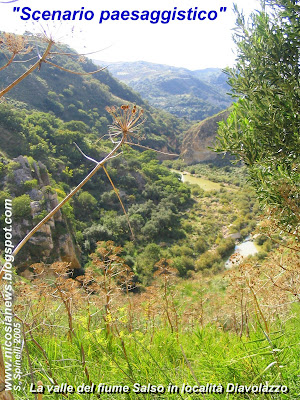
________ The river downstream of Salsa is located 4 km south of the city of Nicosia. In the past it was crossed by major communication trazzere: one coming from Nicosia, known as Serra Battle for the long-known factions which divided the city, enter the Gate in Nicosia for Rabbit, which also moved the dirt road for Troina. The dirt road
Channel was active until 1903, there are still traces of it that climb to tortuous climb up to Saint John. A deviation of this dirt road crosses the district Marenga. Today the valley is accessible from this consortium
Stadell and other rolling stock and tracks, accessible from the San Giovanni which overlook the slopes fearful that from 750 meters above sea level of the door of S. John down to the 491 meters on the river bed Salso. It consists of the districts
Farinato, Maritan, St. John, Salinella, S. New Maria on the southern side, and the Chalk districts, Marengo, Fountain Square and Canal on the northern side.
The valley floor is mostly flat, fertile, rich and pleasant to vegetation of olive trees, fruit trees, wheat and legumes. The whole countryside is populated by small houses, which form the backdrop to the River. Here took place the life of the ancient farmers in the fields of peace and serenity, broken only by the roar of the river water. The area is full of white limestone rock, the water that flows is brackish and bitter. Many mines were active in the past in this valley, were also the many famous kilns of chalk. According to the Beritelli Way, were drawn here by 8 columns sorregono the porch and steps of the altar of the Cathedral, the handrails of the choirs of several churches in Nicosia and the stones to build the palaces of the city. There are also many salt mines, which was exported to neighboring countries, the bituminous rocks and clay used in the manufacture of tiles, bricks, pots and pans, baked in kilns that stood near.
deserve special attention Argila that a type of "soap" and la sorgente d'acqua di monte Canalotto, piena di particelle bituminose e di colore di odore di pece. Il nome di pece dato alla contrada deriva proprio da questo odore caratteristico.
Spesso qui si viene per gare sportive di pesca. Questa campagna è ricca di storia e di arte; molti furono i nobili che vi posero le loro dimore. Si vuole pure che in contrada S. Maria del Soccorso avesse una sua piccola residenza di campagna il madrigalista Pietro Vinci (l'attuale casa Provenzale).
Nel lontano 1378 in Santa Maria del Soccorso, vennero a stabilirsi alcuni frati benedettini giunti a Nicosia dal monastero di Gangi vecchio verso il 1300 e stabilitisi in un primo momento nel convento annesso all'attuale chiesa di San Benedetto.
Il priore Tommaso Maselino, ebbe le terre del Soccorso dal barone Rainaldo Salomone e dalla moglie Beatrice (nel 1373), perchè con i proventi potesse presto costruire il convento. Il feudo donato si trovava in contrada Farinato 5 Km. a sud della città. Qui i monaci benedettini fondarono il monastero ed eressero la chiesa a S. Maria del Soccorso.
Agli inizi del Cinquecento la chiesa ebbe una statua in marmo della Vergine, opera del Gagini, donata dal nobile Vincenso La Via, barone di Buttero. Con la benedizione della chiesa alla Madonna del Soccorso, la contrada smise di essere denominata col nome di Farinato e cominciò ad essere chiamata
Santa Maria del Soccorso (in dialetto
Soncorso). 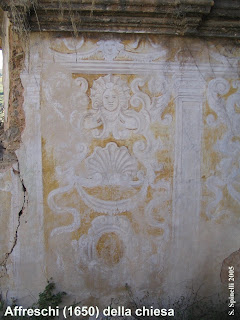
Successivamente, qualche km further north, another house was built to support the monastery to collect the taxes of the upper part of the feud. It still exists in fair condition. At the end of 1600, due to poor health of the place, and after more than 50 years of uncertainty, the monastery was abandoned and left to the government of a priest appointed by the Prior General. This is to avoid the clause of the donation, for which the fee if abandoned by the monks would return to the donor. Finally abandoned after the revolutionary laws of 1866 that abollirono ecclesiastical possessions, the estate became the property of Nicosia and later the Special and then in the fifties was sold to other private individuals. To visit the valley there
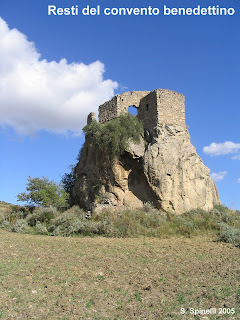
to get away from S. Via S. Benedetto and Anna and then go along the road consolrziale Canalotto-Salty river. From there a small street leading to a few tens of meters from the monastery, a huge work in spite of the medieval past centuries retain the original structure. It is built with stones of different types (sandstone, limestone, lava), and the carvings are made of gray stone of St. John. The whole complex consists of two areas: a western part consists of a large structure, perhaps around a living room with a few small rooms, and a southern part of substantial size. It is accessed by a door and this means a square hallway with some stairs to get to the ruins of what was the real set of 20 cells. Nella cucina si notano i resti del forno e della fornace. Accanto ad esso ci sono ancora due ambienti ed una nicchia. Al centro, tra le due ale, c'è una scala che conduce alla parte alta.
La scale è formata da cinque rampe con 40 gradini, ed è in parte conservata.
Entrado si trova un ingresso da cui si accede ad altre sette stanze una delle quali con volta a crociera, mentre in un'altra si notano le mensole di un ballatoio crollato.
Gli archi delle porte d'ingresso sono a forma di trifoglio e il pavimento in terracotta.
All'esterno, all'altezza delle finestre, si nota un cornicione sporgente. A poca distanza, non più di quaranta metri, sorge la chiesa dove sono ancora visibili l'altare e le pitture the walls are in good condition under the rubble can be seen the brick floor late sixteenth-century paintings, as well as a cornice with two lateral niches. Two hundred meters from the church there is a kiosk with four strings and an eighteenth-century baronial home.
Nelkla upper part of the river, stands the Benedictine another building consists of a two-story structure, in very poor condition, it is accessed by a small road that starts from the door of S. John. From this road you will reach even the country house of Baron Salinella, built in ashlar stone with terra cotta pottery.
(July 12, 1998 - A. Sample)


